Introduction to Fourth Generation Computers
The fourth generation (1970s–1980s) and beyond brought microprocessors, personal computers, and networks. The Intel 4004 (1971) began the shift to microprocessor-based systems. Microcomputers and PCs spread globally in the 1980s (e.g. IBM PC, Apple II). Large-scale integration (LSI) and very-large-scale integration (VLSI) allowed powerful laptops and workstations. Software diversified with graphical interfaces, databases, and early networking.
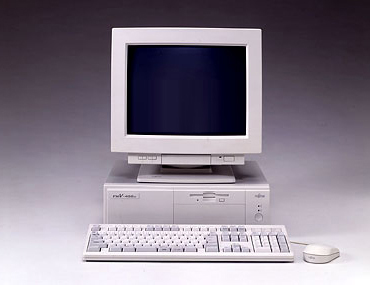
Fourth Generation Computers: The era of microprocessors and personal computing.
Key Features
Microprocessors
Central processing units on a single chip, enabling smaller and more powerful computers.
Personal Computers (PCs)
Computers designed for individual users, becoming widespread in homes and offices.
Computer Networks
Development of local area networks (LANs) and wide area networks (WANs).
Graphical User Interfaces (GUIs)
User-friendly interfaces with windows, icons, menus, and pointers.
Databases
Advancements in database management systems for organizing and accessing information.
More Details
In India, fourth-gen technologies arrived later but rapidly. In the 1980s, the government's LPG economic reforms and agencies like C-DAC (1988) spurred growth. Local firms (Tata, HCL, Wipro) started PC assembly (IBM-PC clones) and minicomputers. For example, by 1985 India had thousands of PCs in offices and homes. The Indian government prioritized IT: the National Informatics Centre (NIC) was established (1976) and later opened computer services, and India's first supercomputer (PARAM 8000 by C-DAC, 1991) demonstrated indigenous high-tech capability. By the 1990s-2000s, India had a booming software industry (Infosys, TCS) and massive Internet adoption.
By contrast, in the US/Europe the transition to microprocessors and networks began earlier (1970s) and was dominated by companies like Intel, Microsoft, and telecom giants. India often imported chipsets and software but gradually built assembly plants (e.g. Texas Instruments set up fabs) and produced its own workstations (e.g. Wipro microcomputers by the mid-1980s). Today, India's tech sector is a global player in services and chip design, reflecting a late but accelerating embrace of the latest generations of computing.
References: While detailed coverage of PCs and networks is beyond this scope, sources include general computing histories and reports on India's IT evolution (e.g. ECIL reports, C-DAC histories). The trends noted above are well-documented in technology and business literature.
3D Model Placeholder: PC or Network Diagram
History and Milestones
1971
Intel releases the 4004, the first single-chip microprocessor.
1980s
Personal computers become widespread globally (e.g., IBM PC, Apple II).
1985 (India)
Thousands of PCs in offices and homes in India.
1988 (India)
C-DAC established, spurring indigenous R&D.
1991 (India)
India's first supercomputer, PARAM 8000, unveiled.