Introduction to 4G
The fourth generation (4G) of mobile networks, introduced in the late 2000s, represented a quantum leap in mobile communications. Defined by the International Telecommunication Union (ITU) under the IMT-Advanced standard, 4G networks were designed to provide true broadband speeds and support for advanced multimedia services.
Long Term Evolution (LTE) emerged as the dominant 4G technology, with the first commercial LTE network launched by TeliaSonera in Stockholm and Oslo in 2009. This was followed by Verizon Wireless in the United States in 2010, marking the beginning of widespread 4G deployment.
The development of 4G was driven by the increasing demand for mobile data services and the need to support bandwidth-intensive applications like HD video streaming, online gaming, and cloud services. The technology represented a complete shift to an all-IP network architecture, eliminating the traditional circuit-switched voice networks of previous generations.
4G networks were designed to provide peak download speeds of up to 1 Gbps for stationary users and 100 Mbps for mobile users, though real-world speeds typically ranged from 5-50 Mbps depending on network conditions and user location.
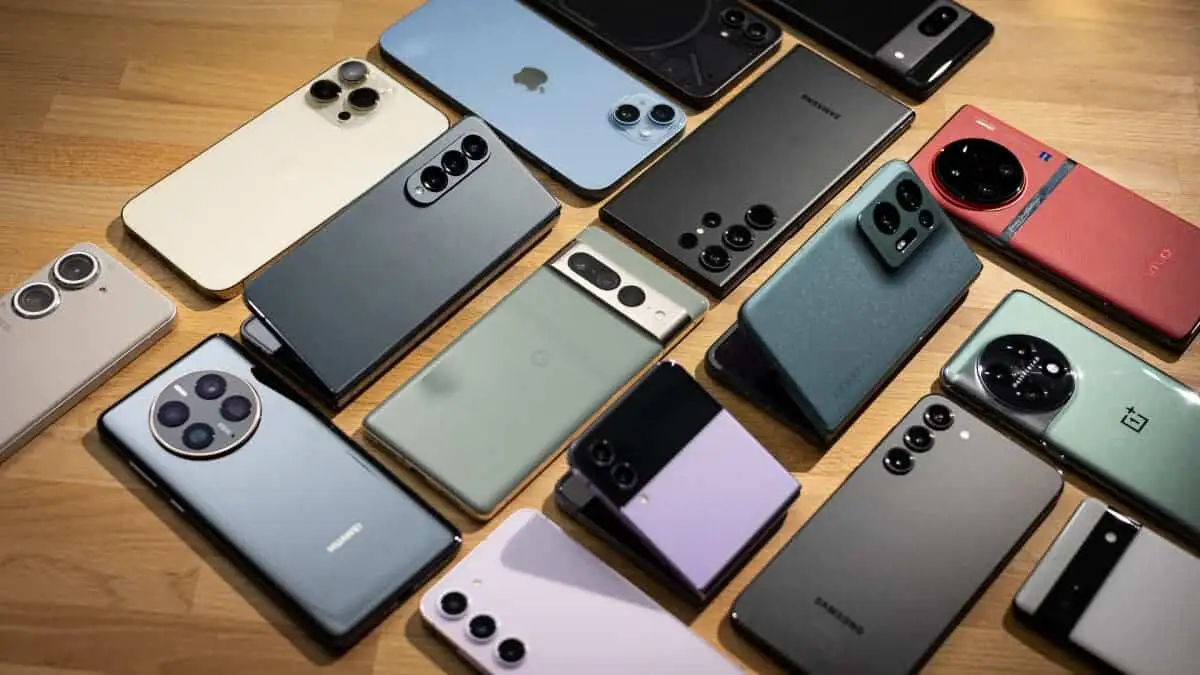
Modern smartphones with 4G LTE connectivity enabled high-speed mobile internet access.
Technical Specifications
Data Speeds
Peak speeds up to 1 Gbps (stationary) and 100 Mbps (mobile), with typical speeds of 5-50 Mbps.
Network Architecture
All-IP network with packet-switched technology, eliminating circuit-switched voice networks.
Advanced Technologies
MIMO, OFDMA, and carrier aggregation for improved performance and capacity.
Latency
Significantly reduced latency (20-30ms) compared to 3G networks (100-200ms).
Regional Development
Europe
Europe was an early adopter of 4G LTE technology, with Scandinavian countries leading the way. The European Union's Digital Agenda for Europe set ambitious targets for 4G coverage, aiming to provide 30 Mbps broadband access to all citizens by 2020. By 2015, LTE coverage had reached 80% of the EU population.
North America
The United States saw rapid 4G deployment, with Verizon and AT&T leading the way. The FCC's spectrum auctions for 4G frequencies generated billions in revenue and helped accelerate network deployment. By 2013, 4G coverage had reached 90% of the US population.
Asia-Pacific
South Korea and Japan were among the first countries to deploy 4G networks, with SK Telecom launching LTE in 2011. China's mobile operators began large-scale 4G deployment in 2013, with TD-LTE becoming the dominant standard. India's 4G rollout, led by Reliance Jio in 2016, revolutionized the country's mobile internet landscape.
Key Innovations and Impact
Major Innovations
- All-IP network architecture for unified voice and data services
- Advanced antenna technologies (MIMO) for improved signal quality
- Carrier aggregation for increased bandwidth
- Voice over LTE (VoLTE) for high-quality voice calls
- Enhanced mobile broadband (eMBB) capabilities
Evolution to 4.5G and 4.9G
- LTE-Advanced Pro introduced carrier aggregation and 256-QAM
- LAA (License Assisted Access) for unlicensed spectrum use
- Massive MIMO for improved capacity and coverage
- Pre-5G technologies and features
Social and Economic Impact
4G networks transformed the mobile industry and society at large. The high-speed, low-latency connectivity enabled new services and business models, from ride-sharing apps to mobile video streaming. The technology supported the growth of the Internet of Things (IoT) and mobile cloud computing, while also enabling remote work and digital transformation across industries. The success of 4G demonstrated the importance of mobile broadband infrastructure for economic growth and social development.
Impact on Society
Mobile-First World
4G networks enabled the transition to a mobile-first digital world, where smartphones became the primary computing device for many users.
Streaming Revolution
Facilitated the rise of streaming services, mobile video platforms, and on-demand content consumption.
IoT Growth
Supported the initial growth of the Internet of Things (IoT) and connected devices.
Challenges and Limitations
Infrastructure
Required significant investment in new network infrastructure and equipment
Power Consumption
Higher power requirements for maintaining high-speed connections
Coverage
Challenges in providing consistent coverage in rural and remote areas
Evolution to 5G
4G networks set the foundation for 5G by establishing the importance of high-speed mobile broadband and all-IP networking. The experience and infrastructure developed for 4G have been crucial in the development and deployment of 5G networks.