Introduction to 1G
The first generation of mobile telecommunications standards, known as 1G, emerged in the 1980s, marking the true birth of cellular networks. The term "1G" itself was not used at the time but was retroactively applied to describe this pioneering era of analog cellular communication.
In Japan, Nippon Telegraph and Telephone (NTT) launched the world's first commercial cellular network in Tokyo in 1979. Panasonic manufactured the first phone for this network, the TZ-801, which was designed as a car phone.
In the United States, Bell Laboratories played a crucial role, building and trialing the first cellular network around Chicago in 1977-1978. The Advanced Mobile Phone System (AMPS), which became the primary analog mobile phone system in North America, was primarily developed through a cooperative effort between Bell Labs and Motorola, Inc. Ameritech launched the first 1G cellular network in the US in Chicago in 1983, utilizing the Motorola DynaTAC mobile phone.
The Nordic countries were also pioneers in wireless technologies, collaboratively designing the Nordic Mobile Telephone (NMT) standard. European companies like Ericsson contributed to the development of NMT and supplied equipment for early UK TACS networks.
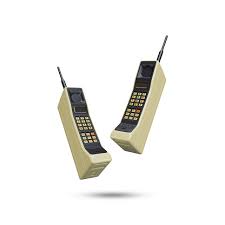
The iconic Motorola DynaTAC 8000X, the first commercially available mobile phone.
Technical Specifications
Analog Technology
Utilized analog radio signals for voice transmission using Frequency Modulation (FM), similar to two-way land mobile radios.
Data Speed
Limited data speed of approximately 2.4 kbps, primarily used for control signals.
Frequency Bands
Operated at frequencies around 150 MHz and above, with AMPS specifically using the 800-megahertz region.
Cell Size
Large cell sizes, typically ranging from 2 to 20 kilometers.
Regional Development
United States
The Advanced Mobile Phone System (AMPS) became the predominant analog mobile phone system. By the end of its first year, there were 200,000 AMPS subscribers across the US, a number that surged to over 2 million within five years. By 1990, the total number of mobile phone subscribers in the US had reached 5 million.
Europe
Europe presented a more fragmented landscape with various regional standards. The Nordic Mobile Telephone (NMT) system was widely adopted in Nordic countries, Austria, Belgium, Luxembourg, the Netherlands, and Spain. The United Kingdom and Ireland adopted the Total Access Communication System (TACS), while West Germany, Portugal, and South Africa utilized C-450. France had Radiocom 2000 and Italy employed RTMI.
India
India entered the mobile telephony age considerably later than its Western and East Asian counterparts. The country's initial step into mobile communication occurred on January 1, 1987, with Mahanagar Telephone Nigam Limited's (MTNL) 'Mobile Radio Phone Service' in Delhi, which was a rudimentary car phone service.
Key Innovations and Impact
Major Innovations
- The cellular concept itself, involving dividing geographic areas into smaller "cells"
- Handoff technology enabling seamless mobility between cells
- International roaming capabilities (first introduced by NMT)
- Integration of software-controlled switches
Adoption Challenges
- High costs: Early mobile phones cost around $4,000 in America in the 1980s
- Bulky devices: Often referred to as "brick phones" due to their size and weight
- Limited battery life: Required frequent recharging
- Network capacity issues: Could only serve a limited number of users within a cell
- Poor call quality: Susceptible to interference and static
- Security vulnerabilities: Complete lack of encryption
Social and Economic Impact
Despite its limitations, 1G represented a monumental step forward in mobile communication. Early mobile devices quickly became powerful status symbols and technological milestones. While high costs prevented widespread consumer adoption, 1G networks were well-received in the business sector, providing unprecedented mobility and convenience.