Introduction to Third Generation Computers
The third generation (mid-1960s through early 1970s) saw the advent of integrated circuits (ICs) and time-sharing operating systems. ICs (invented in 1958) packed multiple transistors on a single silicon chip, making computers smaller, faster, and cheaper. This allowed for new computer families. The most famous was IBM's System/360 (announced 1964) – a unified architecture spanning small to large machines – which used ICs and ushered in modular software (OS/360). Meanwhile, a new class called minicomputers emerged.
DEC's PDP-8 (1965) was the first truly successful mini-computer: 12-bit, transistor-based, it cost under $20,000 and sold over 50,000 units. Other mini-computers included the PDP-11, Data General Nova, and various systems from Honeywell and Varian, often used by laboratories and industry. This era also saw the introduction of microprocessor-inspired technologies and further language development (e.g. BASIC in 1964).
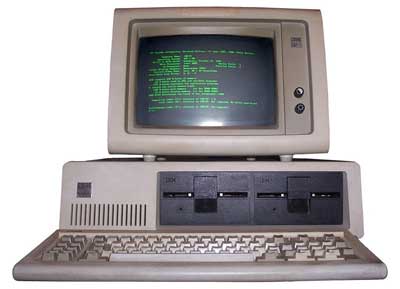
Placeholder image for Third Generation Computers: Integrated circuit or minicomputer.
Key Features
Integrated Circuits (ICs)
Introduction of ICs led to smaller, faster, and more reliable computers.
Minicomputers
Emergence of smaller, more affordable computers for laboratories and industry.
Time-Sharing Operating Systems
Allowed multiple users to access a single computer simultaneously.
High-Level Languages & Software
Further development of high-level programming languages and modular software.
More Details
In India, third-generation developments continued the earlier trends. Although IC technology was cutting-edge, Indian engineers began using transistors and small-scale ICs in local designs. In 1969 India's Trombay Digital Computer (TDC-12) was completed at BARC – a 12-bit real-time computer whose design was similar to DEC's PDP-8. S. Srikantan and his team at BARC wrote original system software (assembler, basic FORTRAN) for it. TDC-12 was later upgraded to transistorized versions (TDC-312 in 1974 and TDC-316 in 1975). Meanwhile, ECIL continued production; by 1978 it had sold a total of 98 computers (TDC-12, TDC-312, TDC-316, and a microprocessor-based MICRO78).
Government initiatives also shaped this generation. The Department of Electronics (DoE) was created in 1970 (M.G.K. Menon as secretary). The 1968 Bhabha Committee report – upon which DoE policy was based – insisted on "self-sufficiency in systems engineering" and that medium and small computers be made in India. In practice, IC-based commercial machines were still largely imported; IBM continued leasing 360-series systems through the early 1970s in India (80 IBM-1401s were installed by 1970, and even IBM 7044 and 1620 machines were sold to IITs). Indian Railways and public sector firms also bought Western minis (e.g. a DEC PDP-8 "1077" at IIM Ahmedabad in 1972).
Regional comparison: By this time the US had a mature industry: IBM, DEC, and others led, and many Americans owned multi-user minicomputers or timesharing terminals. Europe had a growing mini sector (e.g. R.V. Eccleston's 2900 series in UK, Bull in France), but U.S. machines were widely licensed. In India, Government labs (TIFR, BARC, DRDO) and academic institutes (IITs, ISI) were the primary users of third-gen tech. The Indian PC revolution had not yet begun, so most machines were at large organizations. Indian companies like ECIL and later Bharat Electronics Ltd (BEL) began collaborating with foreign firms (for instance, BEL assembled ICL machines in the late 1960s). However, in 1978 the Indian government forced IBM to divest its India operations; IBM refused and withdrew. This opened the door for Indian private companies (e.g. Wipro, DCM, ORG) to develop local minis and microcomputers, anticipating the next generation.
References: We draw on histories of minicomputers and Indian computing to document these developments. Rajaraman's IEEE report provides timelines and policy context for India's computing history.
3D Model Placeholder: Integrated Circuit or Minicomputer
History and Milestones
1964
IBM announces System/360 (first IC-based mainframe family).
1965
DEC introduces the PDP-8 minicomputer.
Late 1960s
Time-sharing and batch operating systems spread; UNIX development begins.
1969
BARC (Trombay) commissions TDC-12, India's first in-house digital computer. DoE sets up Electronics Commission.
1970
DoE established; Bhabha Committee calls for indigenous computers. India's first computer science M.Tech programs start.
Early 1970s
Universities and companies install imported IBM 360 series, Honeywell minis, or DEC machines.
1974–75
TDC upgrades released (TDC-312, TDC-316).
1978
Indian government forces IBM to divest India operations.