Introduction to 2G
The second generation (2G) of mobile networks marked a revolutionary shift from analog to digital technology in the early 1990s. This transition brought about significant improvements in voice quality, security, and introduced the ability to send text messages and basic data services.
The Global System for Mobile Communications (GSM) emerged as the dominant 2G standard, developed by the European Telecommunications Standards Institute (ETSI). GSM was first deployed in Finland in 1991 by Radiolinja (now part of Elisa), marking the beginning of a new era in mobile communications.
In the United States, the Telecommunications Industry Association (TIA) developed the Interim Standard 136 (IS-136) and IS-95 (CDMA) standards as alternatives to GSM. These standards competed with GSM in the North American market, with CDMA eventually becoming the foundation for 3G networks.
The introduction of 2G networks coincided with the rise of mobile phones as consumer devices, moving beyond their previous status as business tools. This shift was largely due to improved affordability and the introduction of new features like SMS messaging.
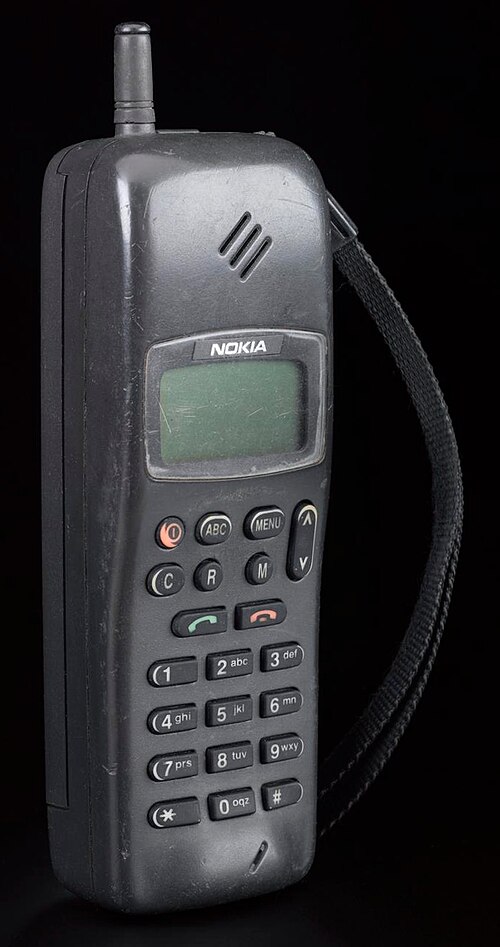
The Nokia 1011, the first commercially available GSM phone, launched in 1992.
Technical Specifications
Digital Technology
Utilized digital signals for voice transmission, providing better quality and security than analog systems.
Data Speed
Basic data speeds of 9.6 kbps, with GPRS (2.5G) later increasing speeds to 40-60 kbps.
Security
Introduced encryption for voice calls and implemented SIM cards for secure subscriber identification.
SMS Support
Enabled text messaging capabilities, with the first SMS sent in 1992.
Regional Development
Europe
Europe led the 2G revolution with GSM, which quickly became the global standard. By 1993, GSM networks were operational in 22 countries, and by 1995, there were 10 million GSM subscribers worldwide. The European Union's decision to mandate GSM as the standard for all member states was crucial to its success.
United States
The US market was more fragmented, with multiple competing standards. IS-136 (TDMA) and IS-95 (CDMA) were the primary alternatives to GSM. This fragmentation led to slower adoption rates compared to Europe, but it also fostered innovation in digital cellular technology.
Asia
Japan developed its own 2G standard, Personal Digital Cellular (PDC), while other Asian countries primarily adopted GSM. China's adoption of GSM in 1994 marked the beginning of its mobile communications revolution, which would later make it the world's largest mobile market.
Key Innovations and Impact
Major Innovations
- Digital voice encoding and transmission
- SIM card technology for subscriber identification
- SMS messaging system
- Basic data services (WAP, GPRS)
- International roaming capabilities
Evolution to 2.5G
- General Packet Radio Service (GPRS) introduced packet-switched data
- Enhanced Data Rates for GSM Evolution (EDGE) improved data speeds
- Introduction of basic mobile internet services
- Support for simple mobile applications
Social and Economic Impact
2G networks transformed mobile phones from business tools into consumer devices. The introduction of SMS created a new form of communication, while improved security and reliability made mobile phones more appealing to the general public. The standardization of GSM created a global market for mobile devices and services, leading to increased competition and innovation in the industry.