About Mobile Networks
The story of mobile communication began long before smartphones – with pre-cellular radio phones (sometimes called "0G"). In the mid-20th century, vehicles and handheld units could place calls via bulky radio telephone systems, but each call had to be routed through a human operator. These primitive networks (the antecedent to 1G) did not use cell towers; instead, a user's voice was sent directly to a regional switchboard. This era laid the groundwork for the first true cellular networks.
Mobile networks have revolutionized the way we communicate and access information. From the first analog cellular networks to the upcoming 6G technology, each generation has brought significant advancements in speed, reliability, and capabilities.
5B+
Mobile Users
6+
Generations
1Tbps+
Peak Speed
Network Performance Comparison
Understanding the Charts
Maximum Data Speed: This chart illustrates the theoretical peak download speeds for each generation. Note the logarithmic scale on the Y-axis for speed; this is necessary because speeds increase exponentially with each generation (e.g., 6G is projected to be vastly faster than 1G).
Latency: This chart shows the typical or target latency (delay) for data transmission in each generation. Lower latency means quicker response times, crucial for real-time applications.
Network Evolution Timeline
Mid-20th Century - 0G
Pre-cellular radio phones. Calls routed through a human operator.
The antecedent to 1G, these networks did not use cell towers.
Late 1970s/Early 1980s - 1G
The first generation of wireless cellular technology. Analog voice calls only.
Japan's NTT launched the world's first commercial cellular (1G) network in Tokyo.
1983First U.S. 1G network went live (Ameritech in Chicago).
1984Motorola's DynaTAC 8000X debuted.
Early 1990s - 2G
Digital voice calls and SMS messaging introduced.
First 2G network (GSM) launched in Finland.
1992The very first SMS was sent.
Improved call clarity and battery life.
GSM became the global standard.
Early 2000s - 3G
Mobile internet era begins with truly high-speed mobile data.
Japan's NTT DoCoMo launched the world's first commercial 3G network.
Needed to support at least 144 kbps, quickly became much faster.
Enabled smooth web browsing, video calls, and early smartphones.
2008Launch of Apple's 3G iPhone made mobile internet mainstream.
Speeds often in the 1–5 Mbps range and up to 42 Mbps at peak.
Late 2000s - 4G
High-speed broadband on the go with "all-IP" networking.
First major 4G (LTE) network launched in Stockholm and Oslo.
Eliminated traditional circuit-switching.
Targets around 100 Mbps (mobile) to 1 Gbps (stationary).
Enabled HD video streaming, fast downloads, and real-time gaming.
Powered the mobile Internet of Things (IoT) boom.
Around 2019 - 5G
The modern connectivity revolution with far higher speeds, lower latency, and massive capacity.
Early major deployments in South Korea and the US.
Roughly 10× faster on average than 4G.
Peak theoretical speeds up to 20 Gbps.
Boosts network capacity up to 100× more devices per area.
Enabling smart cities, IoT at scale, automated vehicles, and remote surgery.
Around 2030 - 6G (Future)
Still largely a vision, aiming to merge communication with computing and sensing.
Initial 6G networks expected.
Terabit-per-second speeds.
AI-driven network optimization, holographic communication, advanced IoT integration.
Proposed use-cases: "Internet of Senses," networks of connected AI machines, digital twins.
Will likely use terahertz spectrum and embed compute everywhere.
Technical Challenges
Infrastructure
Building and maintaining network infrastructure across different terrains and regions.
Security
Protecting networks from cyber threats and ensuring user privacy.
Power Consumption
Managing energy efficiency while maintaining network performance.
Interference
Minimizing signal interference to ensure reliable connections.
Standardization
Developing global standards for seamless network operation and device compatibility.
Leading Innovators
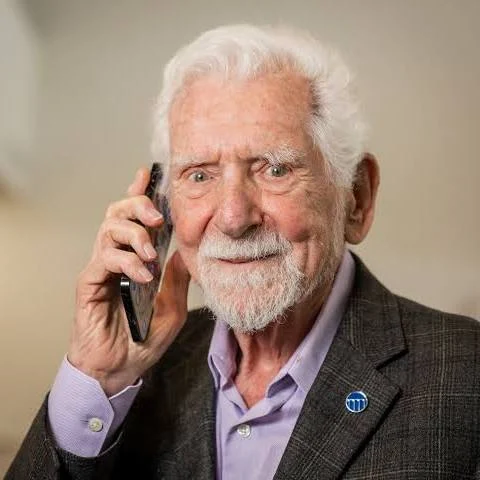
Martin Cooper
Pioneer of wireless communication, led the team that developed the first handheld mobile phone.
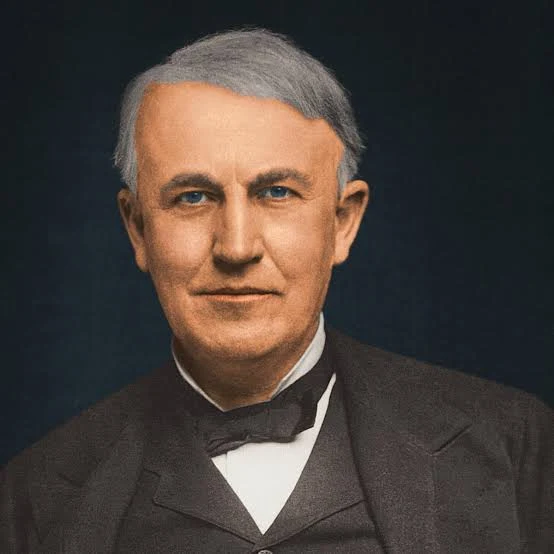
Thomas Edison
His inventions and improvements in telegraphy and telephony laid groundwork for future communication.
Guglielmo Marconi
Known for his pioneering work on long-distance radio transmission.
Alexander Graham Bell
Inventor of the first practical telephone.
The Future of Mobile Networks
6G Vision
Expected to revolutionize communication with:
- Terabit-per-second speeds
- AI-driven network optimization
- Holographic communication
- Advanced IoT integration
- Seamless integration of communication, computing, and sensing
Beyond 6G
Future possibilities include:
- Quantum communication
- Brain-computer interfaces
- Smart environment integration
- Internet of Senses
- Networks of connected AI machines and digital twins